Solar Energy UK
14 April 2026
A plan to offer free electricity when wind and solar energy supplies are at their height will allow consumers with battery energy storage systems to benefit the most.
The National Energy System Operator (NESO) announced today that its Demand Flexibility Service, in place since the winter of 2022/23, will be extended to homes and businesses this summer.[1] So running a dishwasher, washing machine or other appliance during periods of excess supply would deliver a financial reward.
Doing so would support the functioning of the grid while reducing its running costs, by squeezing out ‘constraint payments’ to renewable energy generators when the grid is unable to cope with the amount of power produced. The payments are a symptom of chronic under-investment in the grid, which is now being tackled.
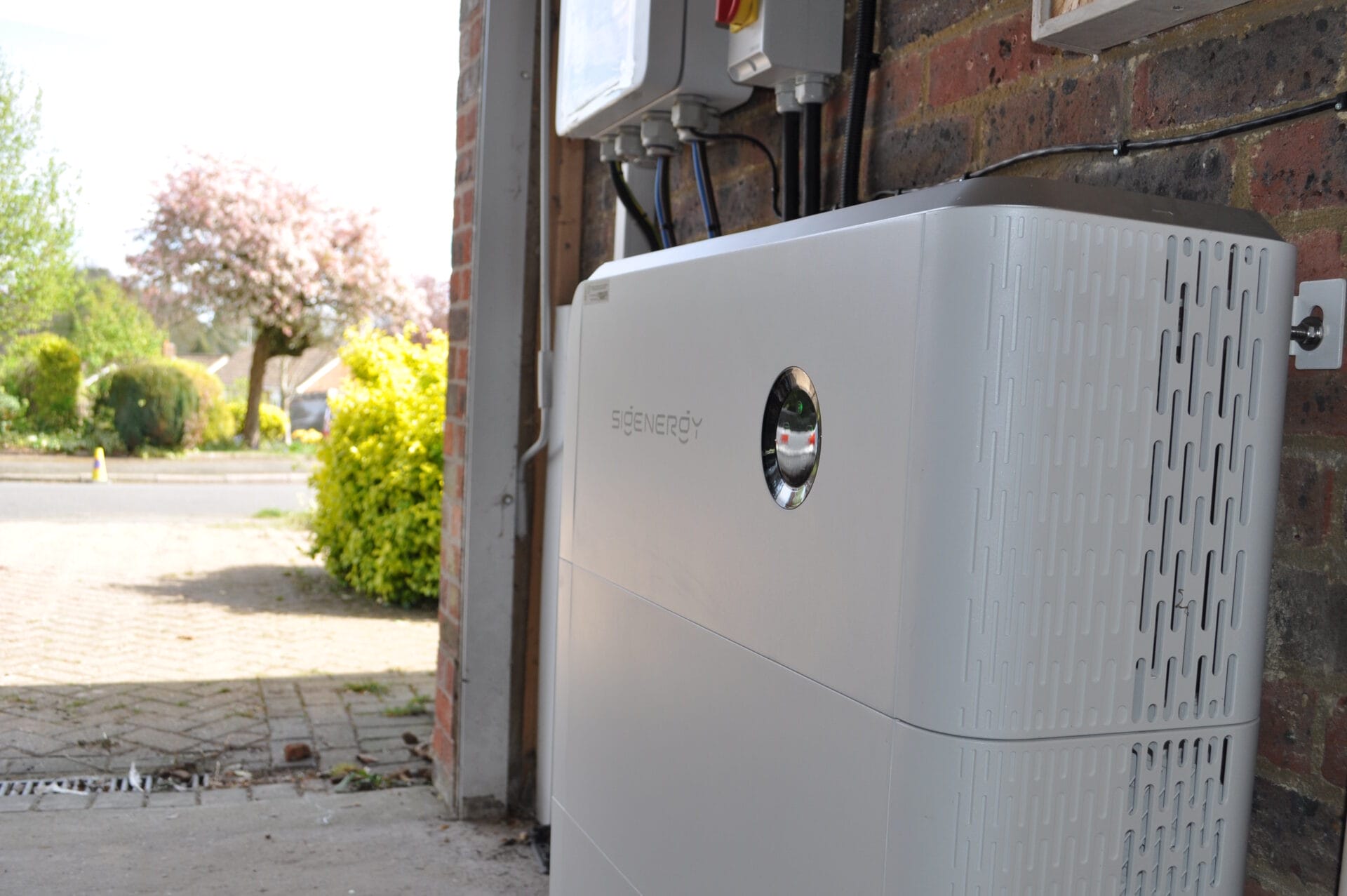
The vast majority of residential-scale solar power installations now come with battery energy storage systems, which are around half the size of a typical fridge. Thousands are being fitted every month, helping households to store power when it is cheap and plentiful, and use it when it is needed.
Residential battery systems can store and discharge significant amounts of energy, typically in excess of 10kWh (well over five average washing machine cycles). They can also be set up to respond automatically to signals from the grid, maximising the economic benefits of contributing to NESO’s scheme.
More generally, batteries can be charged with cheap power overnight, lowering household running costs – a boon when solar generation is lowest over winter. During the day, they can be charged from the Sun, with power either kept for later use or sold back to the grid in the evenings, when the price of power is greatest.
This principle is driving the expansion of utility-scale battery storage systems around the UK, too. Some systems – able to handle a gigawatt of power or more and around the capacity of two nuclear power stations – are in the pipeline. The UK’s total installed battery capacity is now around six gigawatts.
As stated in NESO’s update, increased renewable generation and nuclear power mean that we will occasionally see an oversupply of power during warm, sunny days. This means that periods of free electricity are expected to become more common.
It adds that, during periods of low consumer demand, high wind generation and sunny weather, the growth in battery storage and time-of use-tariffs will provide significant within-day flexibility, meaning better management of the balance of electricity supply and demand.
“Extending the Demand Flexibility Service to homes and businesses is a very welcome move by NESO. The hundreds of thousands of homes and businesses around the country that have battery energy storage systems will benefit the most. It will also create even more of an incentive to invest in a solar and battery installation, too,” said Chris Hewett, Chief Executive of trade association Solar Energy UK.
“Replacing or supplementing constraint payments with a more flexible system that encourages more electricity consumption when it is most abundant is a sensible decision. High renewables leads to low cost power and we want as many consumers as possible to take advantage of this.” he added.
[1] Summer Outlook – Helping the electricity industry prepare for summer – NESO
– ENDS –
Editor’s notes:
For more information or to request an interview, please contact:
Gareth Simkins, Senior Communications Adviser
Author

Gareth Simkins
Senior Communications Adviser
Talk to me about
PR Crisis Management • PR & Media • NSIP Communications